
Commercial EV Chargers: How to Choose the Right One for Your Business
The EV revolution is in full swing - and businesses across the UK are stepping up to meet the moment. Whether you're running a hotel, a football stadium, a business park, or a council building, installing EV chargers isn’t just a box to tick for sustainability - it’s a chance to drive revenue, attract footfall, and future-proof your site.
_Z1EEOXH.webp?dpl=dpl_9UnYMs7GAEnn3gCXG2t9Ge2gyuLH)
The EV revolution is in full swing - and businesses across the UK are stepping up to meet the moment. Whether you're running a hotel, a football stadium, a business park, or a council building, installing EV chargers isn’t just a box to tick for sustainability - it’s a chance to drive revenue, attract footfall, and future-proof your site.
But how do you choose the right commercial EV charger?
How do you choose commercial EV chargers?
Commercial EV chargers are best chosen by matching the charger type to how long vehicles stay on your site: AC chargers of 7kW to 22kW suit hotels, offices and overnight parking, while DC rapid chargers of 50kW and above suit quick-turnover sites. Then check your grid capacity, cable type, software, support and funding before you buy.
The market is full of options, acronyms and specifications - AC vs DC, tethered vs untethered, Garo vs Alpitronic. The good news is, you don’t need to become an expert to make the right decision - you just need to understand a few key principles.
Let’s walk through the key considerations when choosing a commercial electric vehicle charger.
1. Understand AC vs DC Charging
Before you choose a charger, it’s essential to understand the difference between Alternating Current (AC) and Direct Current (DC) charging.
🔌 AC Charging (Fast Charging)
Power range: 7kW to 22kW
Charge time: 3-8 hours
Best for: Hotels, offices, staff car parks, overnight charging
Lower installation cost and energy demand
⚡ DC Charging (Rapid & Ultra-Rapid Charging)
Power range: 50kW to 300kW+
Charge time: 20-60 minutes
Best for: Roadside, retail parks, quick turnover sites, logistics depots
Higher cost but much faster charging speeds
For example, at Cameron House Hotel, we installed a dual DC rapid hub with 60kW and 120kW units from Garo - giving hotel guests and passing drivers a 100+ mile top-up in under 30 minutes. Read the full Cameron House case study here.
The choice comes down to dwell time and usage patterns:
Do your visitors stay for hours or overnight? AC is perfect.
Do you need fast turnover and quick top-ups? Go DC.
If you are weighing up the two, our guide to fast vs rapid EV chargers goes into more detail.
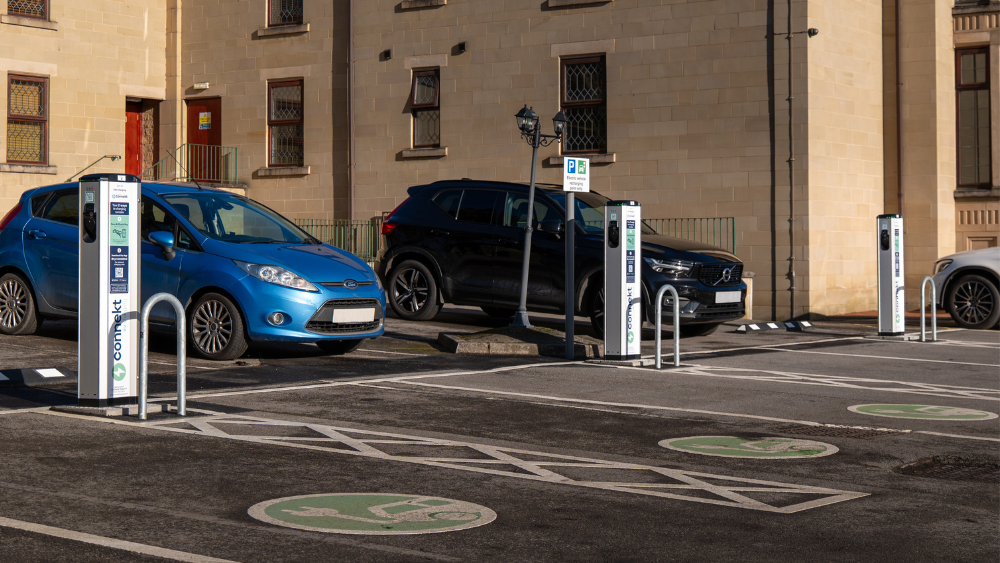
Row of 3 x 22kW AC Chargers from Garo
2. Know Your Hardware Suppliers: Garo vs Alpitronic (and Others)
The EV charger market is growing fast, with dozens of hardware manufacturers offering different specs, form factors and features.
⚙️ Garo
A well-established supplier known for high-quality AC fast chargers
Clean design, durable, and ideal for hospitality and public sector installs
Typically available in 7kW or 22kW formats
Good choice for mid-sized businesses, councils, and SMEs
⚙️ Alpitronic
Industry leader in DC ultra-rapid charging
Flagship product: Hypercharger HYC150 (up to 150kW) and HYC400 (up to 400kW)
Modular design, sleek UI, perfect for rapid charging hubs or high-demand sites
Both suppliers are excellent but choosing the right one depends on what your users need, and what your site can support in terms of energy load, as well as your budget, of course.
3. Tethered vs Untethered: What’s the Difference?
Another key decision is whether to go for tethered or untethered chargers.
🔗 Tethered Chargers
Have the charging cable permanently attached
Easier for users - just plug in and go
Less flexible in terms of compatibility (limited to Type 2)
More expensive installation
🧳 Untethered Chargers
Require users to bring their own charging cable
Cleaner look, more durable in public spaces
Future-proof if connector standards evolve
Tethered options are often preferred in hospitality or retail, where ease of use is key. Untethered units are more common in public or fleet settings, where flexibility and resilience matter more.
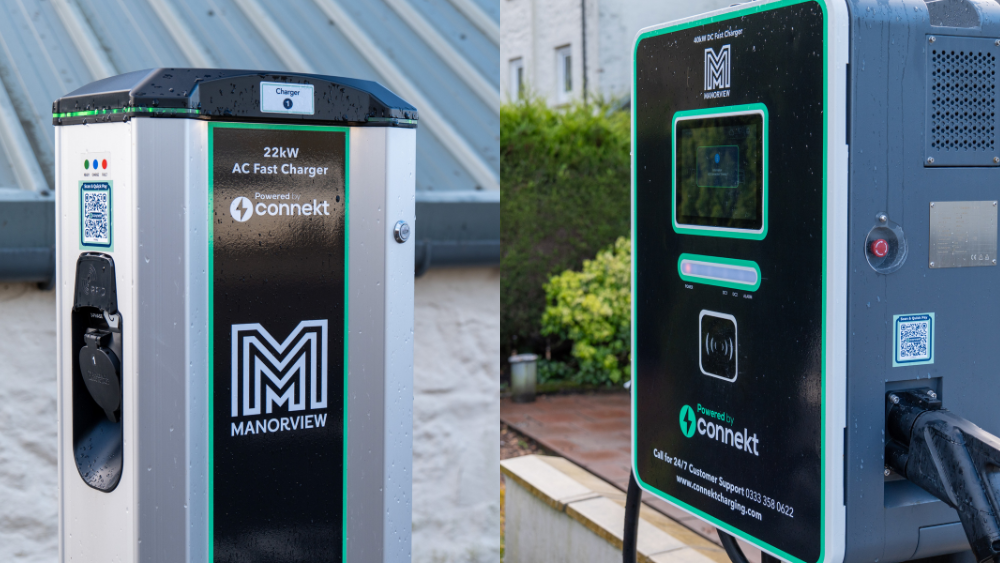
Left - 22kW AC Charger from Garo. Right - Tethered 40kW DC Charger from Hydra
4. What Does It Cost to Install Commercial EV Chargers?
Costs can vary widely depending on:
Type of charger (AC vs DC)
Power output (7kW to 300kW)
Site preparation and grid connection
Mounting (wall-mounted vs pedestal)
Payment systems and software integration
Here’s a ballpark:
AC fast charger install: £1,500-£4,000 per unit
DC rapid charger install: £10,000-£35,000+ per unit
For a fuller breakdown, see how much a commercial EV charger installation costs.
At Connekt, we also offer fully funded models where we cover installation and earn through a revenue share - ideal for businesses wanting to offer EV charging without upfront investment.
We’ll also help you explore grants and funding, including OZEV schemes and local council incentives. You can see what may be available on our funding page.
5. Why Install EV Chargers at All?
If you're still weighing up whether EV chargers are worth the investment, consider this:
Attract new customers: EV drivers plan journeys based on charge availability
Increase dwell time & spend: Customers stay longer, spend more
Future-proof your business: Regulation and demand are only going one way
Sustainability branding: Showcase your green credentials
Generate passive income: Through paid public charging
Whether you're a hotel, retail park, public sector site, or fleet depot - EV chargers are no longer a luxury - they're a strategic asset.
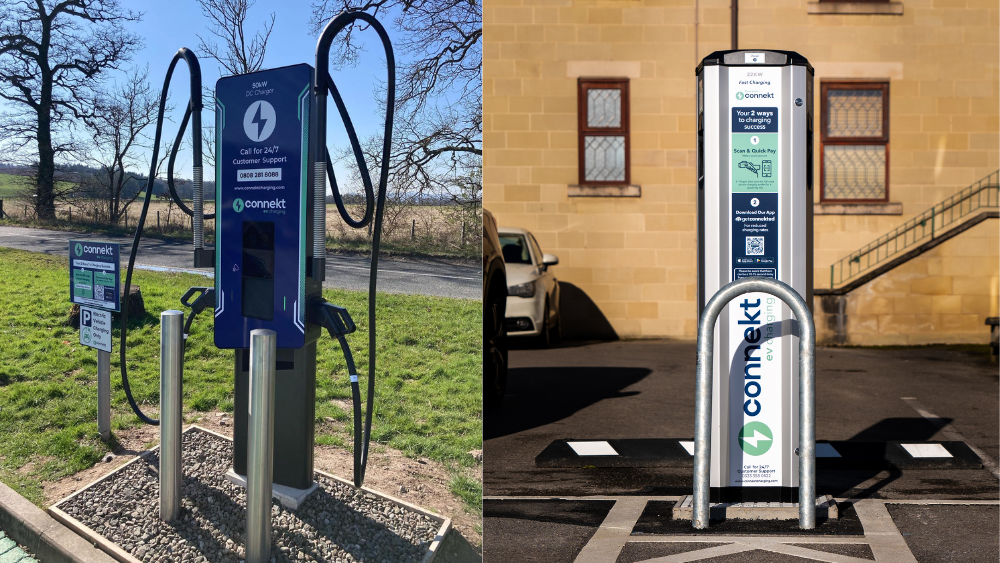
Left - 50kW DC Charger from Alpitronic, Right - 22kW AC Charger from Garo
Frequently asked questions
What are commercial electric vehicle chargers?
Commercial electric vehicle chargers are charge points built for business sites rather than homes: hotels, workplaces, car parks, fleet depots and public venues. They are tougher, often networked so they can take payment and report faults, and range from 7kW AC units for long stays to DC rapid chargers of 50kW and more for quick top-ups.
How is a commercial electric car charger different from a home charger?
A commercial electric car charger is designed for many different drivers rather than one household. It usually needs payment or access control, back-office software, remote monitoring and a support line for drivers, and it may need a larger grid connection. Home chargers are typically single 7kW units with none of those requirements.
How much do commercial electric car chargers cost?
As a ballpark, an AC charger installation runs from about £1,500 to £4,000 per unit and a DC rapid charger from about £10,000 to £35,000 or more, depending on groundworks and grid connection. Fully funded models can remove the upfront cost altogether. Our installation cost guide explains what drives the price.
Which commercial car chargers suit a hotel or workplace?
For hotels, offices and staff car parks, where cars are parked for several hours or overnight, 7kW to 22kW AC commercial car chargers are usually the right fit. Rapid DC chargers make sense where visitors stay under an hour or where you want to attract passing drivers. See our hotel charging and workplace charging pages for examples.
Need Help Choosing the Right Charger?
At Connekt, we do more than install chargers - we design tailored EV charging strategies for commercial sites across the UK. From site surveys and grid assessments to funding, branding, and long-term maintenance, we make it simple.
📞 Call us on 0808 2818088
📩 Get in touch with the team today to discuss your site
🔗 Or explore our real-world installs, including Cameron House and RAD Group
This article is general information, not electrical, legal or financial advice. Grant eligibility, regulations and tariffs differ across the UK and change over time; check the current position with a qualified installer or the relevant body before acting.
_WrWBx.webp?dpl=dpl_9UnYMs7GAEnn3gCXG2t9Ge2gyuLH)
_Z133ynG.webp?dpl=dpl_9UnYMs7GAEnn3gCXG2t9Ge2gyuLH)
_1lIAED.webp?dpl=dpl_9UnYMs7GAEnn3gCXG2t9Ge2gyuLH)